have you had a whole body CT/CAT or 3D dental xray? i had a brain CT in early 90s when i lived in germany and since then experienced progressive chronic nerve-related issues with dozens of odd body/mind symptoms/issues that become impossible to circumvent/ignore.
not saying CT or military vaccines alone are causal, as that more likely originates from genetics/injury/trauma. and while we can't do much beyond letter writing and petitions re neurotoxic poisoning from roundup sprayed at every mall, park, school and hospital, or about FDA irradiation of our food supply. or about the radiation dosed by the radar/tetra/microwave wireless grid and 5G rollout all around us, both sources that could trigger/excite/amplify/accelerate all else, we have some some say in how many times we walk through those microwave airport body scanners or expose our brains to CT scans (which dwarf the issue of endless dental xrays we all know too well).
thousands of airport TSA who work near the body scanners have come down with various cancers, its a buried story. you can't win, we either risk having our loved one's fondled/groped, or get high dose fried/scanned by microwave and milliwave when you fly or visit the doctors. lookup the logan cluster.
i stumbled onto this article two years back when an ENT was suggesting a CT scan of my sinuses which this article helped me decide against. everyone with kids and partners need to consider this information now way before it comes up. its probably too late for some.
it comes up for me now again that a neurologist who thinks my myriad of muscle and sensation neuropathies (twitches/numbness/pain) and nerve damage are caused by "mini strokes" is now asking for one, and if the CT i got mid 90s may have amplified it (along with the 3G 4G and 5G rollouts, i have to think hard about what miniscule benefit roi may outweight the risks, specially if treatments would be remain the same.
will print it out for my doc but i encourage you to keep this email around like i did for when you think someone needs a CT/CAT scan.
sidenote: i tried to do an open MRI brain scan 10 days ago, and doing your legs and arms was tough enough, but this is a straight jacket for your skull. i tried twice, but in 5-10 seconds of them locking shut the facemask cage and making sure you can't move your head, i thought: "wait, WTF" and anxieties magnified by this nerve-damage arose and phobias kicked in and i had to use all my energy to not panic and trust this tech was going to open the mask as quickly as she could vs teach me a lesson like some dominatrix. nerve damage and neuropathy suck (doc says i got both) like whole body slow-onset dementia, and accelerated aging.
it only took 5+ years and 5+ doctors to get the diagnosis that finally confirmed my research-based hunch and self-diagnosis of some 13+ years, describing it in 2011 to my yoga/pilates coach and mate in an email as 'it all feels like a slow-motion 20-year mini stroke'. hence my focus on neurotoxins since 03 that can exacerbate nerve anomalies of all kinds incl allergy/skin/gut/sinus symptoms in tandem with joint/muscle anomalies.
takeaways
- 1 CAT scan = up to 200 chest xrays
- 15,000/yr die due to cancer created by CT scan radiation
- it is size/dose specific ex. bone circumference; ask for minimal dose
- 5% of imaging tests are ordered by MDs mainly as a defense against lawsuits
- only 9% of ER physicians surveyed knew CT scans increased cancer risk (and ER is cutting edge)
- children often get same doses as adults, which are many times overkill, children's cells are many times more sensitive to radiation.
- one CT scan generally leads to another and more, so you're better off to 'just say no' as often as you can to all of it
- fear of lawsuits: 35% of imaging tests are ordered as a defense against lawsuits, not because of true medical need
- If the scan isn't necessary or emits the wrong dose of radiation, the risks far outweigh the benefits. ~Med Dir, Mayo Clinic
- no regulation: there are no federal radiation limits for any kind of CT imaging.
- no national standards for the training or certification of technologists
- 3D dental shot = 6x more radiation than traditional dental X-rays
- one typical CT scan has more radiation than most residents of Fukushima received after the 2011 nuclear power plant disaster.
- always ask for an ultrasound as first line non-radiation imaging
https://www.consumerreports.org/cro/magazine/2015/01/the-surprising-dangers-of-ct-sans-and-x-rays/index.htm
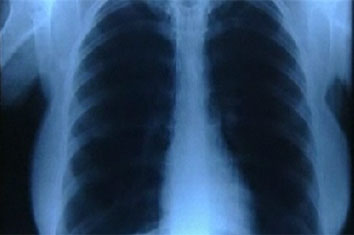


Mar 14, 2015 - In a previous article ("Radiation from CT Scans Linked to Cancer"), .... /2015/01/the-surprising-dangers-of-ct-sans-and-x-rays/index.htm.
27, 2015, and slated for its March 2015 issue, Consumer Reports heralded "The surprising dangers of computed tomography (CT) scans and X-rays," stating in ...
Nov 22, 2014 - Understanding the risks of medical radiation—as well as the real benefits—will ... X-rays and CT scans use so-called ionizing radiation, which contains ... So it's surprising—and concerning—how spotty regulations still are.
"The Surprising Dangers Of CT Scans And X-rays."1. We applaud Consumer Reports for publishing this expose. It will save human lives. We're taken aback, ...
Jan 27, 2015 - Radiation risk 101. CT scans can expose you to as much radiation as 200 chest X-rays. CT emits a powerful dose of radiation, in some cases equivalent to about 200 chest X-rays, or the amount most people would be exposed to from natural sources over seven years.
The surprising dangers of CT scans and X-rays
Patients are often exposed to cancer-causing radiation for little medical reason, a Consumer Reports investigation finds
Published: January 27, 2015 11:00 AM
1.60
When James Duncan, M.D., a radiologist at Washington University in St. Louis, experienced intense pain in his abdomen in 2010, he rushed to a local emergency room. His doctors suspected kidney stones, but they wanted to be sure, so they ordered a CT scan. Duncan remained motionless as the machine captured a detailed, 3D image of his abdomen. He knew that the test was done when the machine stopped whirring. So he was surprised when the scanner kicked back on after a few seconds.
"I later learned that the technician running the CT mistakenly believed that the first scan didn't include the top of my kidneys, and decided to acquire more images 'just to be sure,' " Duncan says. "The irony: I was getting ready to give a lecture on reducing radiation exposure from medical imaging. And there I was, reluctantly agreeing to a CT scan and then getting overexposed."
Duncan will never know whether that specific scan caused any long-term harm, because it's almost impossible to link radiation exposure from any one medical test to a future illness. But like other researchers, he knows that doctors today order millions of radiation-based imaging tests each year, that many of them are unnecessary, and that the more radiation people are exposed to, the greater their lifetime risk of cancer.
X-rays have been used for almost 120 years, but the introduction of computed tomography, or CT scans, in the 1970s, was revolutionary. The new tests, which use multiple X-ray images, allowed doctors to see with unprecedented precision the inner workings of the human body, and earned the inventors of the device the 1979 Nobel Prize in medicine. Use of the tests grew quickly, rising from fewer than 3 million per year in 1980 to more than 80 million now.
But recent research shows that about one-third of those scans serve little if any medical purpose. And even when CT scans or other radiology tests are necessary, doctors and technicians don't always take steps to limit radiation exposure.
All of that exposure poses serious health threats. Researchers estimate that at least 2 percent of all future cancers in the U.S.—approximately 29,000 cases and 15,000 deaths per year—will stem from CT scans alone. Even some standard X-rays, which expose you to much smaller amounts of radiation, can pose risks if you undergo multiple ones.
"No one says that you should avoid a CT scan or other imaging test if you really need it, and the risk posed by any single scan is very small," says Marvin M. Lipman, M.D., Consumer Reports' chief medical adviser. "But the effect of radiation is cumulative, and the more you're exposed, the greater your cancer risk. So it's essential that you always ask your doctors why they are ordering an imaging test and whether your problem could be managed without it."
Given those risks, why are we—and our doctors—so scan-happy?
15,000
That's the number of people estimated to die each year because of cancers caused by the radiation in CT scans alone.
That's the number of people estimated to die each year because of cancers caused by the radiation in CT scans alone.
For one thing, patients aren't necessarily aware of the danger. A new Consumer Reports survey of 1,019 U.S. adults found that people are seldom told by their doctors about the risks of CT scans and other radiology tests. It's no surprise, then, that only 7 percent of those who had a nondental X-ray and 2 percent of those who had a CT scan thought they might have received the tests unnecessarily. And only 4 percent ever told their doctor they did not want a CT scan. "That's worrisome," says Lipman's colleague at Consumer Reports, Orly Avitzur, M.D. "Patients need to take the lead on this because their doctor may not."
Other studies show that doctors themselves often underestimate the dangers CT scans pose. Moreover, some doctors may actually have a financial incentive to order the tests.
"Health care professionals shouldn't have the right to image children or adults unless they first show that they can do it safely and appropriately, and most of the time in this country, that's not happening," says Stephen J. Swensen, M.D., medical director at the Mayo Clinic in Rochester, Minn. "If the scan isn't necessary or emits the wrong dose of radiation, the risks far outweigh the benefits."
Radiation risk 101
CT scans can expose you to as much radiation as 200 chest X-rays.
CT emits a powerful dose of radiation, in some cases equivalent to about 200 chest X-rays, or the amount most people would be exposed to from natural sources over seven years. That dose can alter the makeup of human tissue and create free radicals, molecules that can wreak havoc on human cells. Your body can often repair that damage—but not always. And when it doesn't, the damage can lead to cancer.
Cancers from medical radiation can take anywhere from five to 60 years to develop, and risk also depends on age and lifestyle. That's why scientists struggled in early attempts to quantify the danger of medical radiation. Until recently, researchers often relied on evidence from the atomic bomb attacks on Hiroshima and Nagasaki. But now research shows that today's medical patients are being harmed, too.
New evidence comes from a 2013 Australian study that looked at more than 680,000 people who had CT scans as children and compared them with some 10 million children who did not have a CT scan. The researchers determined that for every 10,000 young people scanned, 45 would develop cancer over the next 10 years, compared with 39 cancers among 10,000 people not screened. Overall, people scanned had a 24 percent increased cancer risk, and each additional scan boosted risk an additional 16 percent. Children who had one before the age of 5 faced a 35 percent spike in cancer risk, reflecting the fact that young bodies are more vulnerable to radiation.
Other researchers estimate that for every 1,000 children who have an abdominal CT scan, one will develop cancer as a result. And a 2012 study that looked at almost 180,000 British children linked CT scans to higher rates of leukemia and brain cancer.
"All too often children are receiving adult-sized doses of radiation, which is many times the amount they need," Swensen says. "The dose directly increases the risk of leukemia or a solid tumor. And that's not regulated today."
Radiation poses a smaller risk to older people, in part because there is less time for cancer to develop in them, explains David Brenner, Ph.D., director of the Center for Radiological Research at Columbia University. But, he points out, adults actually receive far more scans than children do, "so the bigger issue is actually with adults." Research also suggests that, contrary to expectations, the risk of radiation-induced cancer, notably of the lungs, doesn't decline as we age.
One scan leads to another
One of the insidious ways that unnecessary CT scans increase risk is that a single CT test often leads to another, then another. A disturbing example of that dangerous cascade was featured in an article in the September 2014 issue of the Journal of Patient Safety, co-authored by John Santa, M.D., medical director of the Consumer Reports Health Ratings Center.
An 11-year-old girl received a CT scan because of possible appendicitis. That was the first mistake: An ultrasound, which does not emit radiation, is the best initial test in such situations. The second error occurred when her CT showed a normal appendix but her doctors noted a spot on one lung and decided that it warranted a follow-up CT. Such incidental findings are so common doctors have a name for them: incidentalomas.
Expert advice is to ignore the vast majority of those results because slight abnormalities seen on scans are very common but rarely harmful. Yet many doctors find the urge to order follow-up tests irresistible. For the 11-year-old girl, the CT didn't reveal a tumor or any other problem, but over the next two years her doctors recommended repeat scans of her lungs, all of which would further increase her cancer risk.
"Stories like this occur every day in the United States," Santa and his co-authors wrote. "This unfortunate sequence of patient harm, waste, and needless anxiety could have been completely avoided with an ultrasound. None of this had to happen. None of this has to happen."
Why there's so much overuse
The main reasons for excessive scanning are:
There are also no national standards for the training or certification of technologists (professionals who operate the imaging machines). Some states allow almost anyone to work the equipment. The government relies on three outside accrediting organizations—the American College of Radiology, the Intersocietal Accreditation Commission, and The Joint Commission—to ensure the safety of advanced imaging facilities. But each group has different quality and safety standards.
"As you go around the country, you see all this variation in how medical imaging is being used and adherence to best practices," Duncan says. Starting in 2016, the Centers for Medicare and Medicaid Services (CMS) plans to cut reimbursement rates if CT machines don't have the most recent safety features. It has been reported that about one-third of the scanners now used across the country won't meet those new CMS standards.
Get a second opinion if . . .
Your doctor owns a CT scanner or has a financial interest in an imaging center
An in-office CT might seem convenient, but it carries an inherent financial conflict of interest. And studies have found that physicians who own scanners or are part owners of radiology clinics use imaging substantially more than others. If your doctor owns a scanner, ask why you need the CT or whether another test might be an option. And if he is sending you to a radiology clinic, ask whether he is financially affiliated with it.
Your doctor recommends a "whole-body" CT scan
Those scans are often touted as a way to detect early signs of cancer and heart disease. But most scans—and up to 80 percent in older people—have at least one abnormality that shows up on the exam. Almost all of the abnormalities are harmless, yet about one-third of patients are referred to follow-up imaging, according to a 2013 study. And whole-body CT scans expose you to much more radiation than regular CT scans. One study determined that for every 1,250 45-year-old adults who have the exam, one will die of cancer as a result. Yet it's unknown how many lives the scans might save.
Your dentist recommends a 3D dental shot
The CT technique, called cone-beam CT, exposes children to about six times more radiation than traditional dental X-rays. The American Dental Association says that children rarely need them before orthodontic procedures. And several studies have shown that for any given dose of radiation, children are three to four times more likely than adults to develop malignancies, in part because their cells are more sensitive to radiation.
Where the rays are—and aren't

Ultrasound
High-frequency sound waves sent through the body create echoes as they bounce off organs and tissues. Echoes are then turned into real-time images called sonograms. Produces fairly good images of soft-tissue disease, but they're not very detailed, especially in obese patients. Radiation exposure: none.
MRI
Magnetic resonance imaging uses magnets and radio waves to create detailed images that can help spot cancers and soft-tissue problems. Patients are enclosed in the machine for 45 minutes to 2 hours before the image is captured. Radiation exposure: none.
Mammogram
Uses low-dose X-rays to spot masses and mineral deposits that could indicate breast cancer. Radiation exposure: low.
X-ray
The standard scan emits a broad beam that passes through the body before landing on film, casting shadowlike images. Fluoroscopy produces a continuous image, or X-ray movie. X-ray is excellent for bones. Radiation exposure: minimal to medium.
CT
Computed tomography uses a pencil-thin X-ray beam to create a series of images from multiple angles, which are then transferred to a computer, creating a 3D image that can be enlarged and rotated onscreen. Excellent for looking at soft tissue. Radiation exposure: minimal to high.
PET
Positron emission tomography requires the patient to ingest a radioactive tracer, usually thru injection, that lands in cells, especially cancer cells. Some machines that are used combine PET and CT scans. Radiation exposure: medium to high.
Tests by the radiation dose
Just one CT scan of the abdomen and pelvis equals about 10 millisieverts, more radiation than most residents of Fukushima, Japan, absorbed after the Fukushima Daiichi nuclear power plant accident in 2011.
Procedure | Radiation dose (millisievert) 1, 2 | Comparable exposure from natural sources, such as radon | Should you get it? |
Minimal dose: Less than 0.1 millivert
| |||
X-ray of teeth (bitewing)
|
0.005
|
less than 1 day
|
Most people need one only every 24 to 36 months.
|
X-ray of teeth (full mouth)
|
0.010
|
about 1 day
|
Many people can go a decade between exams.
|
Cone-beam CT of jaw and teeth
|
0.06
|
7 days
|
Rarely needed for most orthodontic procedures.
|
Low dose: 0.1 to 1 millivert
| |||
X-ray of chest (two views)
|
0.1
|
12 days
|
Presurgery X-rays needed only for people with a history of lung or heart disease
(or those at risk) or before chest surgery.
|
Mammogram
|
0.4
|
7 weeks
|
Needed every two years for women ages 50 to 74.
|
Medium dose: 1 to 10 milliverts
| |||
X-ray of spine
|
1.5
|
6 months
|
Rarely needed in first month back pain.
|
CT of head
|
2
|
8 months
|
Not needed for most head injuries. CTs usually aren't needed for a concussion.
|
CT of spine
|
6
|
2 years
|
Rarely needed in first month of back pain.
|
High dose: 10 milliverts and over
| |||
CT colonoscopy
|
10
|
3 years
|
Not as accurate as standard colonoscopy.
|
CT of abdomen and pelvis
|
10
|
3 years
|
For possible appendicitis or kidney stone, ask whether ultrasound can be used.
|
CT angiography (of the heart)
|
12
|
4 years
|
1 in every 1,300 60-year-olds may get cancer as a result, so it probably shouldn't be used for screening.
|
CT of abdomen and pelvis repeated with and without contrast
|
20
|
7 years
|
"Double scans" are rarely necessary; fewer than 5 percent of patients should receive one.
|
PET with CT
|
25
|
8 years
|
It exposes patients to very high radiation doses, so make sure that it is really necessary.
|
1. Doses are typical values for an average-sized adult. The actual dose can vary substantially depending on a person's size as well as on differences in imaging. 2. For every 2,000 people exposed to 10 millisieverts of radiation from a ct scan, one will develop cancer, according to the Food and Drug Administration.
15 Disturbing Facts About CT Scan Safety - BeatCancer.org
Mar 14, 2015 - In a previous article ("Radiation from CT Scans Linked to Cancer"), .... /2015/01/the-surprising-dangers-of-ct-sans-and-x-rays/index.htm.
The Last Read: The New Merchants of Death | Imaging Technology ...
27, 2015, and slated for its March 2015 issue, Consumer Reports heralded "The surprising dangers of computed tomography (CT) scans and X-rays," stating in ...
The Hidden Dangers of Medical Scans | Time
Nov 22, 2014 - Understanding the risks of medical radiation—as well as the real benefits—will ... X-rays and CT scans use so-called ionizing radiation, which contains ... So it's surprising—and concerning—how spotty regulations still are.
Dangers Of CT Scans and X-Rays | Life Extension
"The Surprising Dangers Of CT Scans And X-rays."1. We applaud Consumer Reports for publishing this expose. It will save human lives. We're taken aback, ...
by M Mahesh - 2016 - Cited by 1 - Related articles
phrases such as "We are giving ourselves cancer" [2] or "The surprising dangers of CT scans and x-rays" [3]. The immediate reaction from professional societies ...
The surprising dangers of CT scans and X-rays - Consumer Reports
Jan 27, 2015 - Radiation risk 101. CT scans can expose you to as much radiation as 200 chest X-rays. CT emits a powerful dose of radiation, in some cases equivalent to about 200 chest X-rays, or the amount most people would be exposed to from natural sources over seven years.

No comments:
Post a Comment