- natural causes: wildfires, lightning strikes, volcanic activity, hot spring geysers
- industrial causes: nasa/mil rocket propulsion, industrial boilers, plant stacks, refineries, heavy/mil equipment
Acid Rain: Causes, Effects and Solutions
July 14, 2018
- Acid rain is rain that has been made acidic by certain pollutants in the air. Acid rain is a type of acid deposition, which can appear in many forms.
- Wet deposition is rain, sleet, snow, or fog that has become more acidic than normal.
- Dry deposition is another form of acid deposition, and this is when gases and dust particles become acidic.
- Both wet and dry deposition can be carried by the wind, sometimes for very long distances.
- Acid deposition in wet and dry forms falls on buildings, cars, and trees and can make lakes acidic.
- Acid deposition in dry form can be inhaled by people and can cause health problems in some people.
Air pollution like sulfur dioxide and nitrogen oxides can cause respiratory diseases, or can make these diseases worse. Respiratory diseases like asthma or chronic bronchitis make it hard for people to breathe. The pollution that causes acid rain can also create tiny particles. When these particles get into people's lungs, they can cause health problems, or can make existing health problems worse. Also, nitrogen oxides cause ground-level ozone. This ground-level ozone causes respiratory problems, like pneumonia and bronchitis, and can even cause permanent lung damage. The health effects that people have to worry about are not caused by the acid rain, but are caused when people breathe in these tiny particles or ozone. Swimming in an acidic lake or walking in an acidic puddle is no more harmful to people than swimming or walking in clean water.
Acid Rain Harms Forests
Acid rain can be extremely harmful to forests. Acid rain that seeps into the ground can dissolve nutrients, such as magnesium and calcium, that trees need to be healthy. Acid rain also causes aluminum to be released into the soil, which makes it difficult for trees to take up water. Trees that are located in mountainous regions at higher elevations, such as spruce or fir trees, are at greater risk because they are exposed to acidic clouds and fog, which contain greater amounts of acid than rain or snow. The acidic clouds and fog strip important nutrients from their leaves and needles. This loss of nutrients makes it easier for infections, insects, and cold weather to damage trees and forests.
Acid Rain Damages Lakes and Streams
Without pollution or acid rain, most lakes and streams would have a pH level near 6.5. Acid rain, however, has caused many lakes and streams in the northeast United States and certain other places to have much lower pH levels. In addition, aluminum that is released into the soil eventually ends up in lakes and streams. Unfortunately, this increase in acidity and aluminum levels can be deadly to aquatic wildlife, including phytoplankton, mayflies, rainbow trout, small mouth bass, frogs, spotted salamanders, crayfish, and other creatures that are part of the food web.
This problem can become much worse during heavy downpours of rain or when the snow begins to melt in the spring. These types of events are known as episodic acidification.
Acid Rain Damages Buildings and Objects
Acid rain can also have a damaging effect on many objects, including buildings, statues, monuments, and cars. The chemicals found in acid rain can cause paint to peel and stone statues to begin to appear old and worn down, which reduces their value and beauty.
Published on Feb 27, 2018
What is acid rain? What are its causes and effects? Learn about the role of fossil fuels and pollution, where acid rain occurs, and solutions to reducing the amount of sulfuric and nitric acids in the atmosphere.
Published on Jan 14, 2019
Published on May 29, 2009
Acid rain damage can be seen on many of the monuments in Washington, D.C..
Published on Jul 8, 2018
What happens to your body if there is acid rain? Does it effect your body at all? When rain clouds form, they're not always made up of pure water; in some cases, a chemical reaction takes place, with compounds such as sulfur dioxide and nitrogen oxide that are released into the air. These gases can rise high into the atmosphere, and when they mix and react with the water and oxygen, they fall to the earth as what we know as acid rain.
Acid Rain in China 5m
Published on Jun 5, 2014
CAVEstudios2012
Published on Aug 10, 2014
Learn the basics about Acid Rain. What causes acid rain?
Published on Jul 22, 2014
Using data collected through the EPA long-term monitoring network, Kristin Strock, assistant professor of environmental studies, discusses research that suggests lakes are recovering rapidly from acid rain effects.
Reducing acid rain or its effects | Chemistry for All | The Fuse School 5m
Published on Aug 10, 2014
Published on May 12, 2015
What is Acid Rain?
Acid rain, or acid deposition, is a broad term that includes any form of precipitation with acidic components, such as sulfuric or nitric acid that fall to the ground from the atmosphere in wet or dry forms. This can include rain, snow, fog, hail or even dust that is acidic.
What Causes Acid Rain?
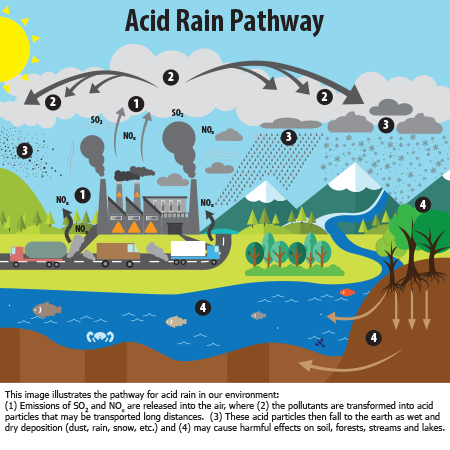 Acid rain results when sulfur dioxide (SO2) and nitrogen oxides (NOX) are emitted into the atmosphere and transported by wind and air currents. The SO2 and NOX react with water, oxygen and other chemicals to form sulfuric and nitric acids. These then mix with water and other materials before falling to the ground.
While a small portion of the SO2 and NOX that cause acid rain is from natural sources such as volcanoes, most of it comes from the burning of fossil fuels. The major sources of SO2 and NOX in the atmosphere are:
- Burning of fossil fuels to generate electricity. Two thirds of SO2 and one fourth of NOX in the atmosphere come from electric power generators.
- Vehicles and heavy equipment.
- Manufacturing, oil refineries and other industries.
Winds can blow SO2 and NOX over long distances and across borders making acid rain a problem for everyone and not just those who live close to these sources.
Forms of Acid Deposition
Wet Deposition
Wet deposition is what we most commonly think of as acid rain. The sulfuric and nitric acids formed in the atmosphere fall to the ground mixed with rain, snow, fog, or hail.
Dry Deposition
Acidic particles and gases can also deposit from the atmosphere in the absence of moisture as dry deposition. The acidic particles and gases may deposit to surfaces (water bodies, vegetation, buildings) quickly or may react during atmospheric transport to form larger particles that can be harmful to human health. When the accumulated acids are washed off a surface by the next rain, this acidic water flows over and through the ground, and can harm plants and wildlife, such as insects and fish.
The amount of acidity in the atmosphere that deposits to earth through dry deposition depends on the amount of rainfall an area receives. For example, in desert areas the ratio of dry to wet deposition is higher than an area that receives several inches of rain each year. ...
https://www.nationalgeographic.com/environment/global-warming/acid-rain/
What Is Acid Rain? 3 Minute Read
Acid rain describes any form of precipitation that contains high levels of nitric and sulfuric acids. It can also occur in the form of snow, fog, and tiny bits of dry material that settle to Earth. Normal rain is slightly acidic, with a pH of 5.6, while acid rain generally has a pH between 4.2 and 4.4.
Causes of acid rain
Rotting vegetation and erupting volcanoes release some chemicals that can cause acid rain, but most acid rain is a product of human activities. The biggest sources are coal-burning power plants, factories, and automobiles.
When humans burn fossil fuels, sulfur dioxide (SO2) and nitrogen oxides (NOx) are released into the atmosphere. Those air pollutants react with water, oxygen, and other substances to form airborne sulfuric and nitric acid. Winds may spread these acidic compounds through the atmosphere and over hundreds of miles. When acid rain reaches Earth, it flows across the surface in runoff water, enters water systems, and sinks into the soil.
A virtual tree graveyard of Norway spruce in Poland bears the scars of acid rain. Caused when rain droplets absorb air pollution like sulfur and nitrogen oxides, acid rain weakens trees by dissolving nutrients in the soil before plants can use them.
Effects of acid rain
Acid rain has many ecological effects, especially on lakes, streams, wetlands, and other aquatic environments. Acid rain makes such waters more acidic, which results in more aluminum absorption from soil, which is carried into lakes and streams. That combination makes waters toxic to crayfish, clams, fish, and other aquatic animals. (Learn more about the effects of water pollution.)
Some species can tolerate acidic waters better than others. However, in an interconnected ecosystem, what affects some species eventually affects many more throughout the food chain, including non-aquatic species such as birds.
Acid rain and fog also damage forests, especially those at higher elevations. The acid deposits rob the soil of essential nutrients such as calcium and cause aluminum to be released in the soil, which makes it hard for trees to take up water. Trees' leaves and needles are also harmed by acids.
The effects of acid rain, combined with other environmental stressors, leave trees and plants less healthy, more vulnerable to cold temperatures, insects, and disease. The pollutants may also inhibit trees' ability to reproduce. Some soils are better able to neutralize acids than others. But in areas where the soil's "buffering capacity" is low, such as parts of the U.S. Northeast, the harmful effects of acid rain are much greater.
Acid deposits damage physical structures such as limestone buildings and cars. And when it takes the form of inhalable fog, acid precipitation can cause health problems including eye irritation and asthma.
What can be done?
The only way to fight acid rain is by curbing the release of the pollutants that cause it. This means burning fewer fossil fuels and setting air-quality standards.
In the U.S., the Clean Air Act of 1990 targeted acid rain, putting in place pollution limits that helped cut sulfur dioxide emissions 88 percent between 1990 and 2017. Air-quality standards have also driven U.S. emissions of nitrogen dioxide down 50 percent in the same time period. These trends have helped red spruce forests in New England and some fish populations, for example, recover from acid rain damage. But recovery takes time, and soils in the northeastern U.S. and eastern Canada have only recently shown signs of stabilizing nutrients.
Acid rain problems will persist as long as fossil fuel use does, and countries such as China that have relied heavily on coal for electricity and steel production are grappling with those effects. One study found that acid rain in China may have even contributed to a deadly 2009 landslide. China is implementing controls for sulfur dioxide emissions, which have fallen 75 percent since 2007—but India's have increased by half.
Acidic fog can be more hazardous to health than acid rain as small droplets can be inhaled. These atmospheric acids can cause respiratory problems in humans such as throat, nose, and eye irritation, headache, and asthma. Acid fog is particularly dangerous for the elderly, those who are ill, and people who have chronic respiratory conditions.
Man-Made Materials: Although sunlight, heat, cold, and wind contribute to the deterioration of man-made structures and objects, acid deposition speeds up this process. Metal structures and vehicles become corroded, and limestone buildings, tombstones, statues, and monuments deteriorate faster when rain is acidic.
Published on Jul 24, 2010
gail zawacki
this is ozone damage and unfortunately, there is no "test". The determination is made by the sort of visible injury, and these photos are consistent with scientific research. Keep in mind that ozone exposure increases the incidence of insects, disease, fungus and weather damage.
35% of Ore coastal brush around Newport is impacted. Even worse than your showing. ... Why Some and not all. Some species are stronger. Example evergreen vs deciduous or blackberry vs rose. This appears to be acidic. But there something else inhibiting the growth hormone!!.
I find it all over the plant, it starts small but within day the entire plant including trees and weeds are effected
9 years ago
Hey Eastern Iowa here, I got the same thing, I just uploaded a video showing my damage. Looks the same as yours.
2010 Toxic Rain re BP Oil Rig Explosion/Fire - 6 vids

No comments:
Post a Comment